
The first day at a new job has a certain electricity to it. I showed up at Dyatron Corporation ready to prove something. Auburn degree in hand, a few months of real-world legwork behind me, and six months of job interviews with many companies in three major cities. I was ready to get to work.
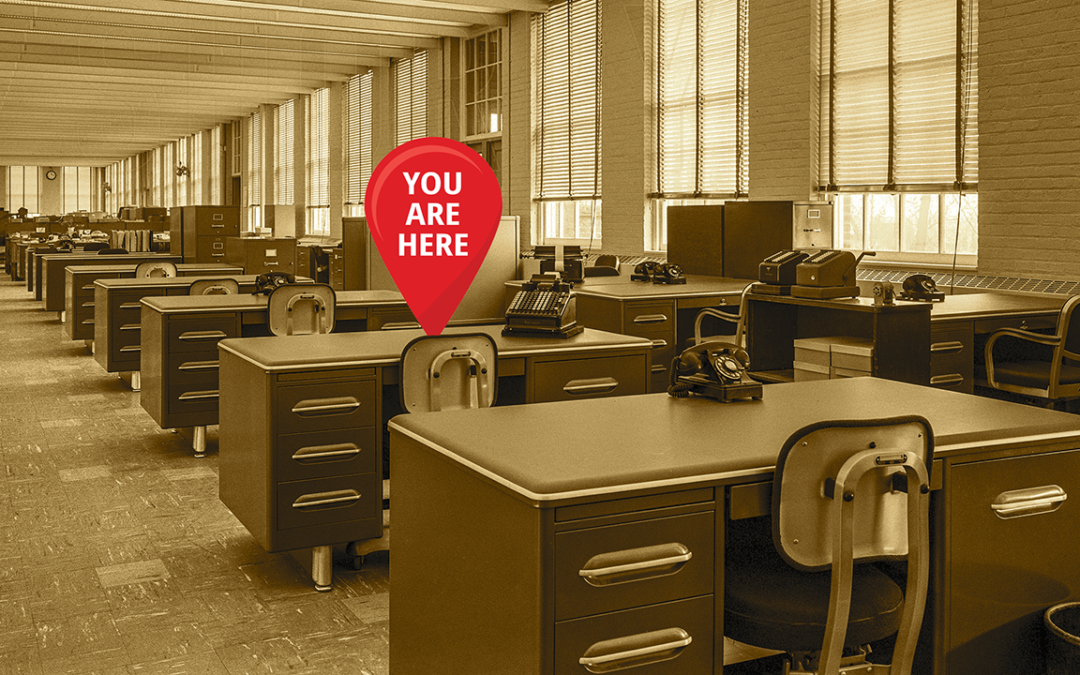
My boss walked me through the office, showed me his desk and then pointed to a desk in the corner and said, "I don't know what you do, but there's your desk."
And that was orientation.
No manual, no senior designer to shadow, no real job description. Just a chair, a surface, and the quiet understanding that I was expected to figure the rest out. My boss was a writer, good at his job, and knew the product and the company politics. He needed to have ads, brochures and an annual report produced, but print production? That was apparently my department now, ready or not.
Here's the thing: I was ready. Not because I had all the answers, but because I'd spent the previous few months doing work that didn't look like preparation but absolutely was.
What I Showed Up With
Before Dyatron, I had spent a few months working as a runner at Luckie & Forney, where my father worked. He called me one morning, woke me up and told me to throw on some clothes and come to the office. They needed a runner, and since I was unemployed and living in his house, I was the perfect candidate. It seems they had a tough time getting car insurance for the runners they thought they had hired. Apparently, that took longer to sort out than anyone expected. While they worked on that problem, I continued to interview for a "real" job.
A runner goes where he's sent. I was sent everywhere. Every printer, every typesetter, every art supplier in the greater Birmingham area. I picked up mechanicals, dropped off film, waited while pressroom guys finished runs and compositors set type. I wasn't designing anything, but I was watching everything and making notes of who these companies were.
Auburn had given me the foundation for thinking visually, solving design problems and working with type and layout. I left not just with a degree but some serious paste-up skills that would be called upon soon. What Auburn couldn't give me was a working relationship with the people who would actually turn my paste-up boards into something you could hold in your hand. My time as a runner did that.
So when my boss pointed to that desk and walked away, I already had a mental map of whom to call. I knew which printer handled two-color work and which one you called when the job needed to be perfect. I knew the typesetters by name. That's not a small thing when you're starting from scratch with no one to ask. And I had a lot of questions to ask.
The Question That Changed Everything
Most people start a new job trying to look like they already know what they're doing. I understood early that it was a losing strategy in print production. There were too many variables, too many ways a job could go sideways between my desk and the pressroom, and there were people who knew far more than I did. So I asked.
My professors taught us how to spec copy when I was in school, so the first time that I took my copy to the typesetters, they looked at me and gave me the "bless your heart" look. They set me straight and showed me what I needed to do, and I asked how I could make their job easier and what annoyed them about other clients. I didn't want to be like those clients. This kind of discussion was the difference between getting my type galleys on time or a day later.
I asked the printer the same kind of questions. How did they want their paste-up boards prepared? What did I need to know to make sure a job ran cleanly? What were the mistakes they saw over and over that they wished designers would stop making? Craftsman Printing took me under their wing and gave me a crash course in offset printing and on how we could best work together.
Nobody turned me away. In fact, most of them seemed genuinely surprised that someone was asking. They were used to designers who assumed they knew enough, clients with no printing experience or knowledge and those who blamed the printer when something went wrong.
Those conversations did two things. They gave me practical knowledge I couldn't have gotten from a textbook. And they built relationships with people who would go out of their way to help me when I needed it, because I had shown them the courtesy of treating them as the experts they were.
Asking good questions early isn't a sign of weakness. It's how you build a foundation that holds up for decades.
What That Foundation Actually Bought
My boss put a lot of trust in me the day he hired me and pointed to my desk. I paid him back by building relationships with our suppliers so that jobs were completed on time and on budget. I could call my printers and talk through potential projects to make sure they were successful. The typesetter knew how I worked, and I knew how they worked. That kind of familiarity doesn't show up on a spec sheet, but it shows up on press day.
Over the years, the tools have changed completely. I went from paste-up boards to desktop publishing to digital files, and the technology kept moving. But the production discipline never changed. When you don't have those skills dialed in, when you haven't asked the right questions of the right people, projects struggle. That was true when I was waxing down type on a board and it's just as true today.
The production knowledge and the supplier relationships I built early are what turned good design work into delivered work. Knowing how to design and knowing how to produce are two different skills, and the gap between them is where projects get expensive.
Forty years later, that foundation is still what I stand on.
The Desk Is Coming. Are You Ready?
That first day at Dyatron taught me something I didn't expect. My degree and my portfolio got me in the door, but the desk didn't care about any of that. It just sat there in the corner and waited to find out if I was actually up for the job.
If you are hiring a brand-new designer, invest the time to bring them up to speed. Introduce them to your vendors. Walk them through your production process. What I learned in those early months at Luckie & Forney and at Dyatron didn't happen by accident. Someone had to be willing to show me, and I had to be willing to learn. That combination is worth more than any software skill on a resume.
School gives you a foundation, and a good one if you paid attention. But the education that actually makes you dangerous happens after graduation. Ask your suppliers how they want to work with you. Learn your clients' business, not just their logo. Stay curious about every part of the process you don't fully understand yet. The designers who grow are the ones who never decide they're done learning.
Forty years ago a man pointed to a desk in the corner and told me he didn't know what I did. I've spent every year since making sure I knew exactly what I did, and exactly how to deliver it.