Recently, I was involved with an organization in a non-designer role. I don't know if they knew I was a designer, and I believe there were other artists and designers throughout this group. When it came time to create a logo and other graphics, the organizers went all-in on AI-produced graphics. They prompted, generated, iterated, and landed on something they loved. They were excited that they could produce it, and they were proud of it. I was disappointed in the final pieces, not because I didn't get a chance to do it (I probably would have had to donate it), but because they could have had so much more.
It made me think of the old saying, "The customer is always right." It is usually invoked by someone who wants to end an argument. But the full quote tells a different story: "The customer is always right in matters of taste." That second part changes everything.
Here's the thing, I get it. There is a genuine rush that comes from making something yourself. If you've spent your whole life thinking of yourself as non-creative and suddenly there's a tool that lets you type a sentence and watch something appear, that feeling is real. I find it in completely different places. Hand me a wrench and let me fix something around the house, saving myself a lot of money, and I get the same satisfaction. The result isn't always pretty, but doing it myself means something.
That impulse to make, to create, to solve it yourself isn't new. And the tools that feed it aren't new either. They just keep getting better.
This pattern goes back further than most people realize, and it has nothing to do with replacing designers. Designers were always in the picture.
Before AI-generated art came on the scene, we had clip art. The name said exactly what it was: artwork you clipped and used. And what it solved was the illustrator problem.
Custom illustration was expensive. Photography wasn't cheap either. For smaller design firms, in-house teams, freelance designers, and the production departments at newspapers and magazines, commissioning original artwork for every brochure, ad, or flyer was simply unrealistic. So designers found another way.
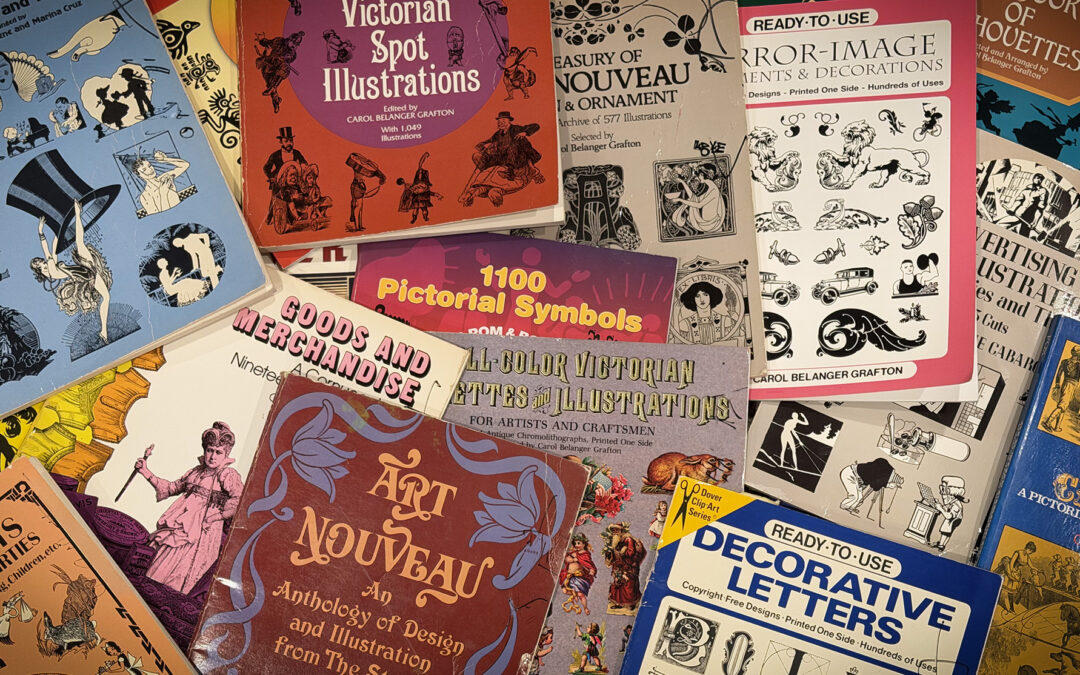
Companies like Dynamic Graphics and Dover published books of ready-made images. You'd flip through, find something that fit the piece you were building, and drop it in. It elevated the work without blowing the budget. Nobody confused it with fine art, but it did the job, and it did it well for a lot of people working in the real world with real constraints.
Designers were still designing, still making decisions about layout, typography, color, and composition. Clip art was just one more resource in the process, one that made visual variety accessible without the cost of a dedicated illustrator on every project.
When design went digital, so did clip art. Suddenly, there were websites full of downloadable logo elements, stock photography libraries, and template systems for flyers, websites and just about everything in between. The options were numerous, and most were cheap or free.
For working designers, a lot of it was genuinely useful, just as clip art books had been a generation earlier. But something else started happening. Business owners who now had a computer on their desk and design software at their disposal saw that they could create their own design by downloading templates and clip art. They could avoid the cost and process of working with a designer or agency.
A business owner could grab a decorative logo flourish, drop their company name next to it, and create their own logo for next to nothing. It wasn't designed so much as assembled, but for many people it was exactly what they needed. They weren't trying to win awards. They needed something on their website and their flyers, and they needed it done.
That same trade-off that existed with clip art was still in play. Speed and accessibility on one side, originality and professional craft on the other. People were making that choice, consciously or not, and most of them were fine with it.
AI has taken that same impulse and given it a significant upgrade. Type a sentence describing what you want, and within seconds, you have something that looks like it was made by a professional. The quality of what comes out of a good prompt today would have been unimaginable to someone flipping through a Dover clip art book in 1985. For a lot of people, it's genuinely enough, and there's no shame in that.
It's not until later that you may find the limits of your AI-generated artwork.
The image that looks great on a website or a flyer can become a real problem the day you want it on the side of a building, or when a vendor tells you they need a vector file for embroidery or screen printing. AI-generated images are raster files, built from pixels. Blow them up past a certain point, and they fall apart. That's a file format problem with a hard limit that no amount of prompting will fix.
But the technical side is only part of it. A professional designer is thinking about how a piece works across every application it will ever live in, from a print ad to a trade show banner to a website header. They're thinking about how a logo reads at different sizes, how it reproduces in a single color, and whether it holds up in black and white. That thinking happens before anything gets made.
There's also the matter of knowing what you need in the first place. Writing a good prompt requires knowing what you want, and most clients don't fully know what they want until someone helps them figure it out. That's a significant part of what a designer brings to the table. The experience to ask the right questions, extract the right information and translate it into something that actually serves the business.
AI can do a lot. Knowing what to ask is a different skill entirely.
Every generation of this tool has come with the same compromise. Clip art, stock templates, downloadable logo builders, and now AI have all offered speed and accessibility in exchange for originality and the knowledge that what you have was built for you and no one else.
That trade-off didn't disappear with AI. It just got harder to see. The output looks more polished than a clip art brochure ever did, which makes it easier to believe you've gotten something custom when you've really gotten something generated. The gap between a professionally designed piece and an AI-generated one still exists. It's just less obvious to someone who isn't trained to spot it.
And that gap tends to show up at the worst possible time. When you're sitting across from a serious client. When your ad runs next to a competitor who invested in their brand. When you need to scale something up and realize what you have won't make the trip.
There have always been two kinds of businesses when it comes to design. Those who are happy with good enough, and those who need something more.
There is nothing wrong with being in the first group. If you are a small operation, a one-time event, or someone who simply needs something presentable and functional, AI may be exactly the right tool for you. You were probably never going to hire a designer anyway, and there is no reason you should feel pressured to. Good enough is good enough when it actually serves your needs.
The second group is where the business decision gets serious. If you are competing against companies that have invested in professional design, the gap between what you have and what they have is visible to your customers, even if it isn't visible to you. You may not look as established. You may not look as trustworthy. You may not look like the obvious choice. That is not an aesthetic problem. That is a business problem.
Professional graphic design is an investment in how your business is perceived by every person who encounters it. Your logo, your print materials, your ads, all of it is sending a signal before you ever say a word. But is that signal working for you or against you?
That calculation hasn't changed since a designer was flipping through a Dover book looking for the right piece of clip art. The tools have changed. The stakes haven't.
Clip art didn't kill professional design. Stock templates didn't kill it either. Neither will AI. What each of these tools did was give people who were never going to hire a designer a way to get something made. That has always been a valid option for the right person in the right situation.
But if your business depends on standing out, on looking like the professional operation you are, on competing against others who have made that investment, then the shortcut has a cost. It may not show up today. It may not show up this year. But at some point, the difference between what you have and what a professional could have built for you will matter to someone whose opinion matters to you.
That's when you'll wish you had made a different call.